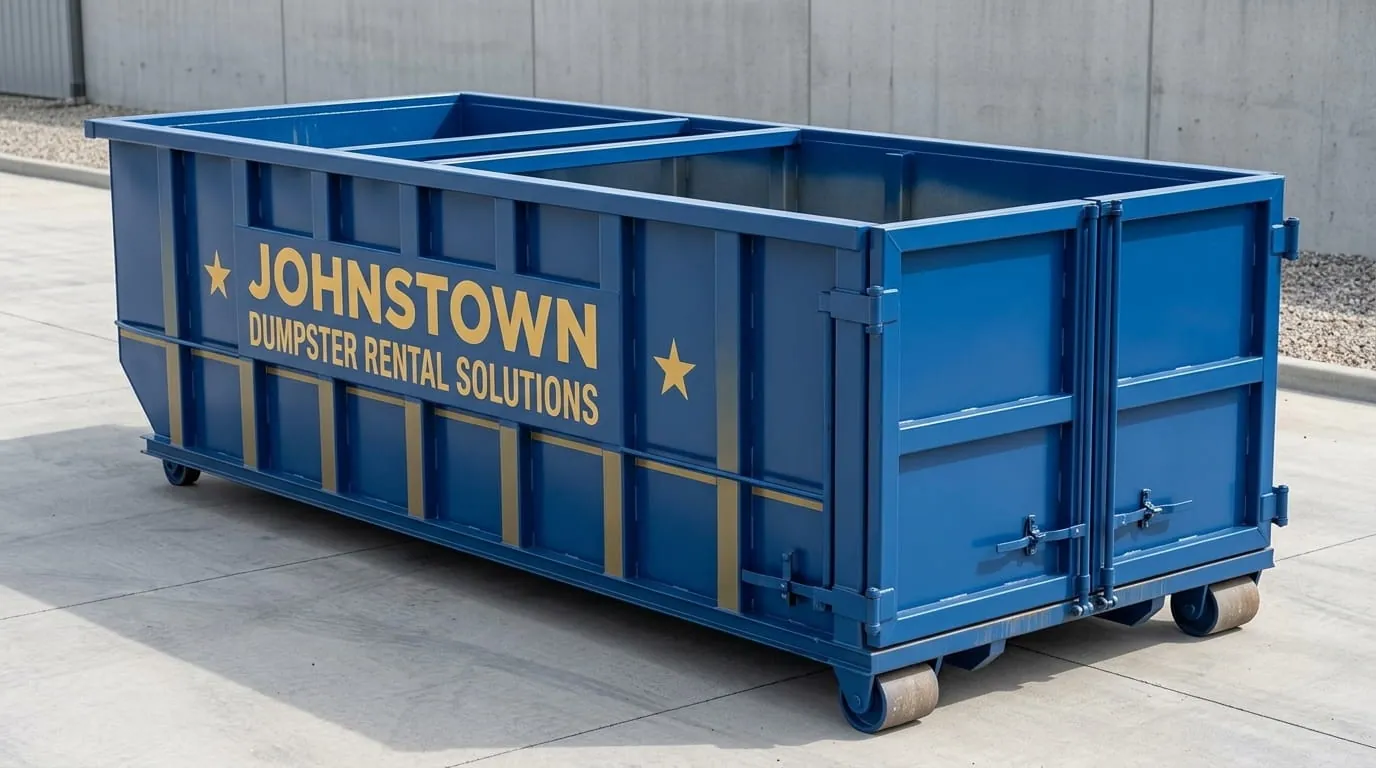
There is no material we haul that fools people more than roofing debris. A stack of torn-off shingles looks like nothing much. It is flat, it is thin, and homeowners around Johnstown are forever surprised when I tell them a single-layer tear-off on a modest ranch can push three tons or more onto the scale. Shingles are asphalt and rock. That is the whole product: a fiberglass or felt mat soaked in asphalt and coated with mineral granules that are, quite literally, crushed stone. Weight is the entire game on a roofing job, and if you rent the wrong container you will either eat a punishing overage fee or watch a driver refuse to lift an overloaded box off your driveway. After years of setting roll-offs on hillside lots all over Cambria County, here is everything I want a homeowner or contractor to understand before the first shingle comes off.
Why Roofing Debris Is the Heaviest Load You Will Ever Haul
Most junk that goes in a dumpster is bulky but light. Old furniture, drywall, deck boards, brush, general household cleanout. You can fill a 20 or 30 yard box to the brim with that material and still come in under the tonnage the truck can legally carry. Roofing is the opposite. It packs down dense and it packs down heavy, so you run out of weight allowance long before you run out of space. That single fact drives every decision on a tear-off, and it is the reason a roofing bin is sized by the ton, not by how much room is left in the container.
Asphalt does not compress into air pockets the way a couch does. A cubic yard of tear-off shingle weighs somewhere between 400 and 600 pounds depending on the type and how wet it is. Rain-soaked shingles that have been sitting on a roof through a Western Pennsylvania winter can weigh even more. So a container that holds 15 cubic yards of feather pillows might legally hold only a fraction of that in roofing before the loaded truck is over weight limits for our roads and bridges. That is why we hand out smaller boxes for roofs, and why we tell you to plan around the scale ticket, not the volume.
The Shingle Weight Math Every Homeowner Should Do First
Roofers measure roofs in squares. One square equals 100 square feet of roof surface, or a 10-foot by 10-foot patch. Shingles are sold and installed by the square, and a square is typically three bundles. Once you know your square count and your shingle type, you can estimate your tonnage within a fairly tight range before you ever call to reserve a bin.
The two common shingle styles carry very different weights. Old three-tab shingles, the flat single-layer style you see on most homes built before the 2000s, run lighter per square. Architectural or dimensional shingles, the thicker layered style that has taken over new roofs, run noticeably heavier. Here is the rule of thumb I use when a customer calls:
| Shingle type | Weight per square (1 layer) | Weight per 10 squares |
|---|---|---|
| 3-tab asphalt | about 210-250 lbs | about 1.0-1.25 tons |
| Architectural / dimensional | about 300-400 lbs | about 1.5-2.0 tons |
| Two layers stacked | double the above | double the above |
Run the numbers on a real house. A typical Johnstown two-story with a moderately complex roof might have 20 squares. If that roof is a single layer of old three-tab, you are looking at roughly two to two and a half tons of debris. If it is architectural shingle, call it three to four tons. And if a previous owner shingled straight over the old roof back in the day, which happens constantly on older homes here, you can double whatever number you just calculated. That is how a homeowner who thought they had a two-ton job ends up with a five-ton pile in the driveway.
Estimating Your Squares
You do not need to climb up there. Take the footprint square footage of the house and multiply by a pitch factor to account for the slope, then divide by 100. A low-slope roof adds little, a steep roof can add 25 percent or more to the surface area. Add extra for dormers, hips, valleys, and overhangs. When in doubt, round up. It is far cheaper to have a little empty space in the bin than to under-order and get stuck with a second haul. If you want a broader walkthrough of matching a container to a project, our guide on what size dumpster you need covers the general approach, and then you layer the roofing weight math on top of it.
One Layer or Three? Why Older Johnstown Roofs Change the Plan
Johnstown has a deep stock of older housing, and older housing means layered roofs. For decades it was standard practice, and legal in many places, to shingle right over an existing roof rather than tearing it off first. Building codes now generally cap a roof at two layers, but plenty of homes in the older neighborhoods are carrying two or even three layers of shingle that have been quietly piling up since the mid-twentieth century.
This matters enormously for sizing your dumpster. Every additional layer roughly doubles or triples your debris tonnage without changing the size of the roof one bit. Before you order a bin, get up in the attic or have your roofer check the eaves and rake edges to count the layers. A 15-square roof carrying three layers of old three-tab is not a two-ton job, it is a five or six-ton job, and that completely changes the container and the number of hauls. If you are hiring a roofer, ask them point-blank how many layers they are pulling and how many tons they expect. A seasoned crew will know.
Why Roofing Wants Its Own Smaller Bin
Here is where a lot of folks go wrong. They see a big 30 or 40 yard container and figure bigger is better, one box, one price, done. On a roof, a big box is a trap. You will hit the weight limit with the container barely a third full, and now you are either paying steep per-ton overage charges or the truck physically cannot haul it because it is over legal axle weight. Nobody wins.
For roofing we steer almost everyone toward a dedicated smaller bin, usually a 10-yard dumpster or a 15-yard dumpster. Here is why the small box is the right call:
- Low sides, easy loading. A 10 or 15 yard box sits low to the ground, so a crew can pitch shingles in from a ladder or off a tarp without hauling debris up and over a tall wall.
- Weight-matched. These bins are rated to carry a sensible tonnage of dense material without going over. The volume and the weight limit line up for roofing instead of fighting each other.
- Fits a tight lot. A short box tucks onto a narrow Johnstown driveway or a hillside pad where a 30-yarder would never fit.
- Predictable cost. When the box is sized to the tonnage, you know your number up front instead of gambling on overage.
For a big multi-layer tear-off, the right answer is often two smaller hauls or a swap-out rather than one oversized box. We would rather set a 15-yarder, haul it when it hits weight, and bring it right back than have you staring at a container you legally cannot fill. Our roofing dumpster rental service is built around exactly this kind of weight-first planning.
Do Not Forget the Nails and Underlayment
A tear-off is more than shingles. Under those shingles is felt or synthetic underlayment, and holding the whole thing down are thousands of roofing nails. A full tear-off strips all of it to the deck. The underlayment adds bulk but little weight. The nails add almost no weight at all, but they are the reason your driveway and yard need protection, which we will get to. If there is old flashing, ridge cap, or a layer of ice-and-water shield around the eaves, that goes in the bin too. Factor a little extra room, but remember the shingles are still what pins the scale.
Protecting Your Driveway and the Street During Tear-Off
Roofing debris is brutal on surfaces. Nails rain down off the eaves during a tear-off, and a dumpster loaded with several tons of shingle sits with real force on whatever is under it. The last thing you want is a cracked driveway, a gouged concrete apron, or a garden full of nails come spring. A few simple steps prevent all of it. Put plywood or thick boards under the container's rails to spread the load and keep the steel off your concrete or asphalt. Tarp the ground and the shrubs along the drip edge so nails and granule grit land on cloth you can gather up, not in the lawn. Run a magnetic sweeper over the driveway and yard when the job is done. We walk through all of this in detail in our guide on protecting your driveway during a dumpster rental, and it is worth the ten-minute read before the crew shows up.
If the driveway simply cannot take the weight or the truck cannot reach it, the next option is street placement. In Johnstown and the surrounding boroughs, a container in the public right-of-way usually needs a permit, and on the narrow streets in the older parts of town placement has to leave room for traffic and parked cars. We handle a lot of this routinely, so if street placement is your only option, tell us early and we will help you sort out the details.
Placement on Tight Hillside and Steep-Roof Lots
Anyone who has driven Johnstown knows this is not flat country. Homes cling to hillsides, driveways run steep, and yards drop away fast. Roofs here tend to be steep too, both to shed our heavy snow and because that is how the older houses were built. Steep roofs mean more surface area per square foot of footprint, which quietly adds to your square count and your tonnage, and they mean a tear-off crew that is throwing debris a long way down to the bin.
Placement on a hillside lot takes some thought. A loaded roofing box is enormously heavy, so it needs firm, reasonably level ground. It should not be parked on a steep slope where it could shift, and the delivery truck needs a clear, sound approach to set it and pick it up. On a tight lot we will often position a small box right at the base of the tear-off zone so the crew is dropping shingles straight in, which is faster and safer than wheelbarrowing debris across a sloped yard. If your lot is genuinely tricky, the best move is a quick call before delivery day. We have set boxes on some very unforgiving Cambria County lots, and it goes a lot smoother when we know the layout in advance. Reach out and describe the site and we will plan the placement with you.
The Western Pennsylvania Roofing Season
Timing is its own challenge up here. Our roofing season is short and it is driven hard by winter. Heavy snow load sits on these roofs for months, and ice dams form at the eaves when heat escapes the attic, melts the snow, and lets it refreeze at the cold overhang. That backed-up ice works water up under the shingles and rots the deck. Come spring, the calls pour in from homeowners who discovered a leak or a sagging eave after the thaw, and a lot of those turn into full re-roofs.
The trouble is the window. You cannot tear off a roof in a snowstorm or a hard freeze, so the practical tear-off season runs from late spring through fall, and everyone is trying to book into the same stretch. That means dumpster demand spikes right when the weather finally cooperates. My advice: if you know a re-roof is coming this year, reserve your container early rather than calling the week you want it. Book the bin when you book the crew. A roof that is already leaking will not wait politely for a box to free up in July.
How to Avoid Overage Fees
Overage fees are almost always avoidable, and they come down to a handful of habits:
- Count your layers before you order. A hidden second or third layer is the single biggest cause of a blown estimate on an older home.
- Do the tonnage math, not just the volume. Multiply squares by shingle weight and by layer count. Order to the tonnage.
- Pick a small, weight-matched box. A 10 or 15 yard bin keeps you honest and low to the ground.
- Keep the load roofing-only. Do not toss general junk into a roofing bin. Mixed loads mess up the weight planning and can trigger extra charges.
- Plan a swap for big jobs. Two right-sized hauls beat one overloaded box that cannot legally move.
When in doubt, tell us your square footage, your shingle type, and your best guess on layers, and we will size it for you. Between our roll-off dumpster rental options and years of roofing loads on the scale, we can usually call your tonnage within half a ton over the phone. That is the difference between a clean flat-rate job and a surprise on the invoice.
Roofing is heavy, and Johnstown roofs are older, steeper, and often multi-layered, so the margin for a bad guess is thin. Do the math, count the layers, protect your surfaces, and put the debris in a bin that is built for the weight. If you have a tear-off coming up, call Johnstown Dumpster Rental Solutions at (814) 809-7504 and we will get the right box on your lot, sized to the ton, before the first shingle hits the ground.

Owner, Johnstown Dumpster Rental Solutions — sharing straight advice from years of local hauling across Johnstown and Cambria County.
Frequently Asked Questions
What size dumpster do I need for a roofing tear-off?
For most residential tear-offs we recommend a small, weight-matched bin such as a 10-yard or 15-yard dumpster rather than a large box. Roofing debris is extremely dense, so you hit the weight limit long before you fill a big container. The right size depends on your square count, whether the shingles are 3-tab or architectural, and how many layers you are removing. Give us those three numbers and we will size it precisely.
How much does roofing debris weigh?
A lot more than it looks. Shingles are asphalt and crushed-stone granules. Figure roughly 210 to 250 pounds per square for old 3-tab and 300 to 400 pounds per square for architectural shingle, per layer. A single square is 100 square feet of roof. So a 20-square single-layer roof runs about two to four tons, and every additional layer roughly doubles it.
Why do older Johnstown homes cost more to re-roof and haul?
Many older homes in Johnstown carry two or even three layers of shingle because previous owners roofed over the old roof instead of tearing it off. Each extra layer multiplies your debris tonnage without changing the roof size, so a job you thought was two tons can easily be five or six. Always count the layers before ordering a dumpster. Check the eaves or attic, or ask your roofer how many layers they are pulling.
How do I protect my driveway during a roofing tear-off?
Put plywood or thick boards under the dumpster rails to spread the load and keep the steel off your concrete or asphalt. Tarp the ground and shrubs along the drip edge to catch falling nails and granules, and run a magnetic sweeper over the driveway and yard when the crew finishes. A loaded roofing box weighs several tons, so the boards under it matter. Our driveway-protection guide covers the full checklist.
When is the best time to schedule a roof tear-off in Western Pennsylvania?
The practical tear-off season runs from late spring through fall, since you cannot strip a roof in snow or a hard freeze. Because heavy snow load and ice-dam damage over the winter drive a wave of re-roofs, demand for both crews and dumpsters spikes as soon as the weather breaks. If you know a re-roof is coming, reserve your container early and book the bin when you book the crew rather than waiting until the week you need it.