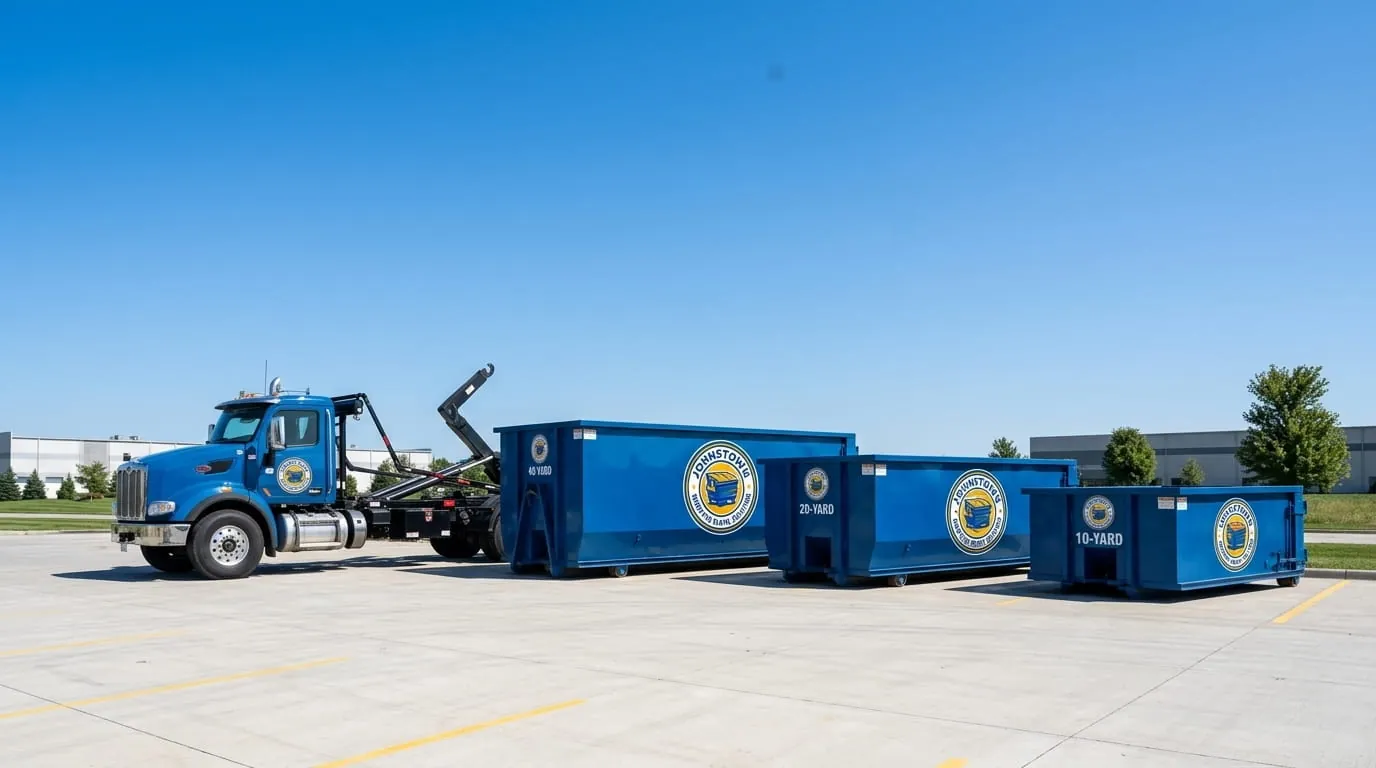
A roll-off dumpster is one of the most useful tools you can park in your driveway for a cleanout, a remodel, or a roof tear-off. It is also one of the heaviest things that will ever sit on your concrete or asphalt. An empty 20-yard container weighs a few thousand pounds on its own, and once you load it with shingles, concrete, or wet debris, the whole rig can push past 10,000 pounds concentrated on a handful of small steel contact points. In Johnstown, where a lot of homes sit on steep hillside lots with older, already-cracked concrete or loose gravel drives, that weight can leave marks, gouges, or fresh cracks if nobody plans ahead. The good news is that driveway damage is almost always preventable. This guide walks through exactly how we protect your surface, what you can do before the truck arrives, and why our brutal freeze-thaw winters make a little extra care worth it.
Why Roll-Off Dumpsters Mark and Crack Driveways
The problem is not really the total weight. It is how that weight is distributed. A dumpster does not sit flat on a giant footprint. It rests on a set of steel rails and wheels, and when the delivery truck rolls it off the bed, all of that load rides on the rear wheels and the trailing edge of the container as it tips down onto your surface. For a few seconds, thousands of pounds press through contact patches the size of your hand. That is when point-load damage happens.
There are three ways a driveway gets hurt during a rental:
- Scuffs and scrapes. The metal rails drag as the box is set down and picked up. On a smooth concrete or freshly sealed asphalt surface, that steel can leave dark streaks or shallow gouges.
- Point-load cracking. Concrete is strong when the load is spread out but weak against concentrated pressure, especially at edges and existing hairline cracks. A wheel parked over a weak spot for a week can turn a cosmetic crack into a structural one.
- Indentation and sinking. Asphalt and gravel both give under sustained weight. On a warm day the asphalt softens; under a loaded dumpster it can dimple or rut where the wheels sit.
None of this is exotic. It is basic physics, and it is completely manageable once you know the levers: spread the load, cushion the contact points, and respect the surface you are working with.
Boards and Plywood: The Simplest Protection There Is
The single most effective thing you can do is put something between the dumpster and your driveway. Professional haulers carry boards for exactly this reason, and a good crew places them without being asked. The idea is to take those small, hard steel contact points and spread the load across a much larger, softer footprint.
Here is what works:
- Two-by-tens or two-by-twelves laid under the rear wheels and the trailing rail. These are our go-to for most residential deliveries. They spread the wheel load and keep steel off concrete.
- 3/4-inch plywood sheets under the full length of the container for softer surfaces like asphalt in summer or older concrete you are worried about. Plywood distributes weight across a broad area and is easy to reposition.
- Doubled-up boards on gravel or soft ground, so the container does not sink and tilt.
If you are placing a dumpster yourself or want extra insurance, a few sheets of plywood or a stack of construction lumber from any hardware store is cheap compared to a driveway repair. Lay them where the wheels and rear edge will land. When in doubt, ask us where the contact points will be for your container and we will tell you exactly where to set the boards. This is standard practice on every residential dumpster rental we do.
Weight Distribution and Smart Loading
How you load the container matters as much as where it sits. A dumpster loaded heavy on one end concentrates force on that end's wheels or edge. Keep these habits in mind:
- Load heavy items low and spread out. Concrete, brick, dirt, and shingles are dense. Distribute them evenly across the floor of the container rather than piling them in one corner.
- Do not overload. Every size has a weight limit for a reason. An overloaded box is not just a hauling problem; it is more force on your driveway the entire time it sits there. If you are not sure which size fits your debris and weight, our guide on what size dumpster you need breaks it down.
- Match the container to the job. For a small bathroom remodel or a modest cleanout, a compact 10-yard dumpster puts far less weight on your surface than a 30-yard box you do not need.
Johnstown Winters: Freeze-Thaw Is the Real Enemy
This is where our local conditions really matter. Johnstown sits in the Allegheny Mountains, and our winters run through dozens of freeze-thaw cycles. Water seeps into every pore and hairline crack in your concrete, freezes, expands by roughly nine percent, and pries the crack a little wider. Thaw, refreeze, repeat. Over a single winter that cycle can turn a cosmetic crack into a spalling, crumbling mess.
Now add a loaded dumpster. If a container sits on concrete that already has water working into a crack, the concentrated weight becomes the final push that opens it up. A few practical steps for cold-weather rentals:
- Keep the pad clear of standing water and ice under and around the contact points before delivery. Boards on top of ice can shift, so clear the landing zone first.
- Use boards religiously in winter. Cold concrete is more brittle and less forgiving of point loads than warm concrete.
- Shovel and salt around the pad so you and the crew have safe footing, and so meltwater drains away from the container rather than pooling under it.
- Do not let the container sit longer than you need. The longer heavy steel rests on freezing concrete, the more chances the freeze-thaw cycle has to work against you. Book the size that lets you finish efficiently.
If your driveway already shows the classic Johnstown pattern of surface cracks and spalling, tell us when you book. We will bring extra boards and take extra care with placement.
Summer Heat and Asphalt
The opposite problem shows up in July and August. Asphalt is a flexible pavement, which is a polite way of saying it softens when it gets hot. On a 90-degree afternoon, blacktop that feels solid in the morning can indent under a steel wheel by evening. If your driveway is asphalt:
- Insist on full-length plywood or multiple boards under the container, not just a couple of two-by-tens.
- Try to schedule delivery and pickup for cooler parts of the day when possible.
- Avoid leaving a fully loaded container parked on hot asphalt for weeks. Load it, let us haul it, and get the weight off.
Concrete vs. Pavers vs. Gravel: Know Your Surface
A lot of older Johnstown homes do not have a wide, pristine concrete driveway. Many have narrow drives, gravel, or decorative pavers, and each surface needs a slightly different approach.
Concrete
The most common and most forgiving surface, as long as it is in decent shape. Boards under the contact points are usually enough. Watch for existing cracks and expansion joints, which are the weak lines where new cracks start. We aim to keep wheels off those joints.
Pavers and Decorative Surfaces
Pavers are the trickiest. Individual units can crack, shift, or sink under concentrated weight, and a rutted paver section is expensive to reset. If your driveway is pavers, we strongly recommend placing the dumpster somewhere else if at all possible, or laying full plywood sheeting to bridge across many units at once. Tell us up front so we plan for it.
Gravel and Narrow Drives
Gravel is extremely common on older properties around here, and it does not crack, but it does rut and shift. A dumpster set on bare gravel can sink unevenly, tilt, and become hard for the truck to retrieve. On gravel we use doubled boards or plywood to create a stable, level base so the container does not dig in. On a narrow drive, the bigger concern is simply fitting the truck and container safely, so measure your usable width and let us know before delivery. Our roll-off dumpster rental team handles gravel and tight drives constantly and can advise on the right container and placement.
Steep and Sloped Hillside Driveways
If there is one thing that defines Johnstown driveways, it is slope. Homes climb the hillsides, and a lot of drives pitch steeply up or down. A dumpster on a slope introduces a real safety issue: the container and the delivery truck can roll or slide if they are not properly secured.
Here is how a careful hauler handles a hillside drive:
- Chock the wheels. Wedges placed against the container wheels keep it from rolling once it is set. On any noticeable grade this is non-negotiable.
- Position the container so its length runs across the slope where possible, or set it at the flattest usable spot, to reduce the tendency to roll.
- Load from the uphill side and keep the load balanced so the container does not become tail-heavy on a grade.
- Back and load carefully. When the truck backs up a steep drive to place or retrieve the box, slow, controlled movements protect both the surface and the surrounding property. A rushed backing maneuver is how scrapes and lawn ruts happen.
If your driveway is too steep or too narrow for safe placement, the container can often go in the street with a permit instead. We will talk through the options rather than force a risky placement.
Backing, Loading, and Pickup Care
Most driveway damage that does happen occurs in the few moments of delivery and pickup, not during the days in between. Careful maneuvering is everything. A good driver eases the container down rather than dropping it, keeps the truck's path clear of soft lawn edges, and lifts the box straight up on retrieval so the rails do not drag. If you have a sprinkler head, a septic lid, a shallow gas line, or a decorative border near the drive, point it out when you book so we route around it.
What a Good Hauler Does Automatically
You should not have to manage all of this yourself. When you rent from a professional, driveway protection is part of the job, not an add-on. On our deliveries we automatically:
- Carry and place boards or plywood under the contact points on any concrete, asphalt, paver, or gravel surface.
- Ask about your surface and slope before we arrive so we bring the right materials.
- Chock wheels on any sloped driveway.
- Set the container down gently and lift it straight up on pickup to avoid dragging.
- Work with you on placement to avoid expansion joints, existing cracks, pavers, and soft spots.
If a hauler shrugs at driveway protection or refuses to use boards, that tells you something about how they will treat the rest of the job. Doing a roofing tear-off? Our guide on choosing the right dumpster for a tear-off covers the weight considerations that also protect your surface.
Protect Your Driveway From the Start
Driveway damage during a dumpster rental is almost entirely avoidable with a little planning: spread the load, cushion the contact points with boards or plywood, respect our freeze-thaw winters and summer heat, and match the container and placement to your specific surface and slope. That is exactly the approach we take on every job across Johnstown and Cambria County. If you have an older, cracked, gravel, or steep hillside drive and want it handled with care, we are glad to talk it through before you book. Explore all our dumpster rental services or reach out directly through our contact page. Ready to schedule? Call Johnstown Dumpster Rental Solutions at (814) 809-7504 and we will get the right container placed safely on your driveway.

Owner, Johnstown Dumpster Rental Solutions — sharing straight advice from years of local hauling across Johnstown and Cambria County.
Frequently Asked Questions
Will a dumpster crack my concrete or asphalt driveway?
It can if nobody plans ahead, because the container's weight rides on small steel contact points instead of a flat footprint. With boards or plywood under the wheels and trailing edge, careful placement away from cracks and joints, and sensible loading, damage is almost always preventable. A good hauler places protection automatically on every delivery.
What should I put under a dumpster to protect my driveway?
Two-by-tens or two-by-twelves under the rear wheels and trailing rail work for most concrete drives. For softer surfaces like summer asphalt or older concrete, use 3/4-inch plywood along the full length of the container. On gravel, double up boards or plywood to keep the box from sinking. We carry and place boards on every job, but a few extra sheets from the hardware store are cheap insurance.
Why is freeze-thaw such a problem for driveways in Johnstown?
Johnstown sits in the Allegheny Mountains and runs through dozens of freeze-thaw cycles each winter. Water seeps into cracks, freezes, expands, and pries them wider, then thaws and repeats. A loaded dumpster parked over an already-weak spot can be the final push that opens a crack. Clear ice and standing water from the pad, use boards religiously in cold weather, and do not let the container sit longer than you need.
Can you place a dumpster on a steep hillside driveway?
Usually yes, with the right precautions. We chock the wheels on any noticeable grade, position the container at the flattest usable spot, load it evenly so it does not become tail-heavy, and back the truck slowly and carefully. If a drive is too steep or narrow for safe placement, the container can often go in the street with a permit instead. Tell us about the slope when you book so we plan for it.
What if I have a gravel or narrow driveway?
Gravel does not crack, but it ruts and shifts, so a dumpster set on bare gravel can sink unevenly and tilt. We use doubled boards or plywood to create a stable, level base. On a narrow drive the main concern is fitting the truck and container safely, so measure your usable width and let us know beforehand. Both are common on older Johnstown properties and we handle them all the time.