If you live or work in Johnstown, you already know the city sits in a bowl where the Conemaugh and Stonycreek Rivers meet. That geography shapes how we handle waste. What gets dumped, spilled, or blown around on higher ground can end up in the water fast, so responsible disposal is not just about a tidy property; it protects the rivers that define our valley. This guide walks through how recycling and waste disposal actually work in Johnstown and across Cambria County, from your weekly curbside bin to a full renovation cleanout, and where a rented dumpster fits into the picture.
How Trash and Recycling Work in Johnstown
Most households in the City of Johnstown and the surrounding Cambria County boroughs and townships receive trash and recycling service through a private hauler, either arranged directly or contracted by the municipality. Because service is handled at the municipal and hauler level rather than by a single countywide utility, the exact pickup day, accepted materials, and bin requirements vary from one neighborhood to the next. The single most useful thing you can do is confirm your own hauler's rules, since a rejected recycling cart or an extra trash fee almost always traces back to a small local detail.
Curbside Recycling Basics
Curbside recycling programs in the Johnstown area generally accept the common household materials, but contamination remains the biggest reason loads get downgraded or landfilled. When in doubt, keep it simple and clean. A typical accepted list looks like this:
- Corrugated cardboard and clean paperboard, flattened
- Newspaper, office paper, and mail
- Aluminum and steel food and beverage cans, rinsed
- Plastic bottles and jugs, usually resin codes 1 and 2
- Glass bottles and jars, where the local program still accepts glass
Things that routinely cause problems include plastic bags and film, foam packaging, greasy pizza boxes, and so-called "wishcycling" of items people hope are recyclable. Plastic bags in particular jam sorting equipment, so return them to store drop-off bins instead of your curbside cart. Rinse containers, leave them loose rather than bagged, and when a program says glass is not accepted, keep it out. Verify your current accepted-materials list with your hauler or the City, because programs are updated periodically.
The Cambria County Solid Waste Authority
For anything that does not fit neatly into a curbside bin, the Cambria County Solid Waste Authority (CCSWA) is the backbone of the system. The Authority operates transfer and disposal infrastructure that consolidates the county's waste and routes recyclables to processors. If you are cleaning out a garage, clearing an estate, or finishing a remodel, understanding what the Authority handles saves you time and prevents the temptation to dump material where it does not belong.
Transfer Station and Drop-Off Centers
The Authority's facilities give residents a legitimate place to bring materials that haulers will not take at the curb, as well as recyclables for those without curbside service. Drop-off recycling locations around the county typically accept cardboard, paper, cans, and certain plastics, and some sites handle additional streams on specific days. Fees, hours, and accepted items differ by location and can change, so call ahead or check the Authority's current information before you load up the truck. A five-minute phone call beats an hour of driving to a closed or wrong-material site.
Construction and Demolition Debris
Renovation and demolition generate the heaviest, bulkiest waste most homeowners will ever deal with, and it is also where diversion matters most. Construction and demolition, or C&D, debris is generally not accepted in curbside trash and cannot go in standard recycling. Much of it, however, can be diverted rather than landfilled. Clean wood, metal, concrete, brick, and cardboard packaging all have recycling or reuse pathways, while mixed and contaminated debris must be disposed of properly. Our related guide on how to dispose of construction debris breaks the process down step by step.
| Material | Typical Handling |
|---|---|
| Clean wood and lumber | Often recyclable or reusable; keep separate from treated wood |
| Scrap metal | Valuable at scrap yards; steel, copper, and aluminum |
| Concrete, brick, block | Can be crushed and recycled as aggregate |
| Drywall, insulation, mixed debris | Usually disposed; check for local diversion options |
| Asphalt shingles | Recyclable at some facilities; verify locally |
| Cardboard packaging | Flatten and recycle |
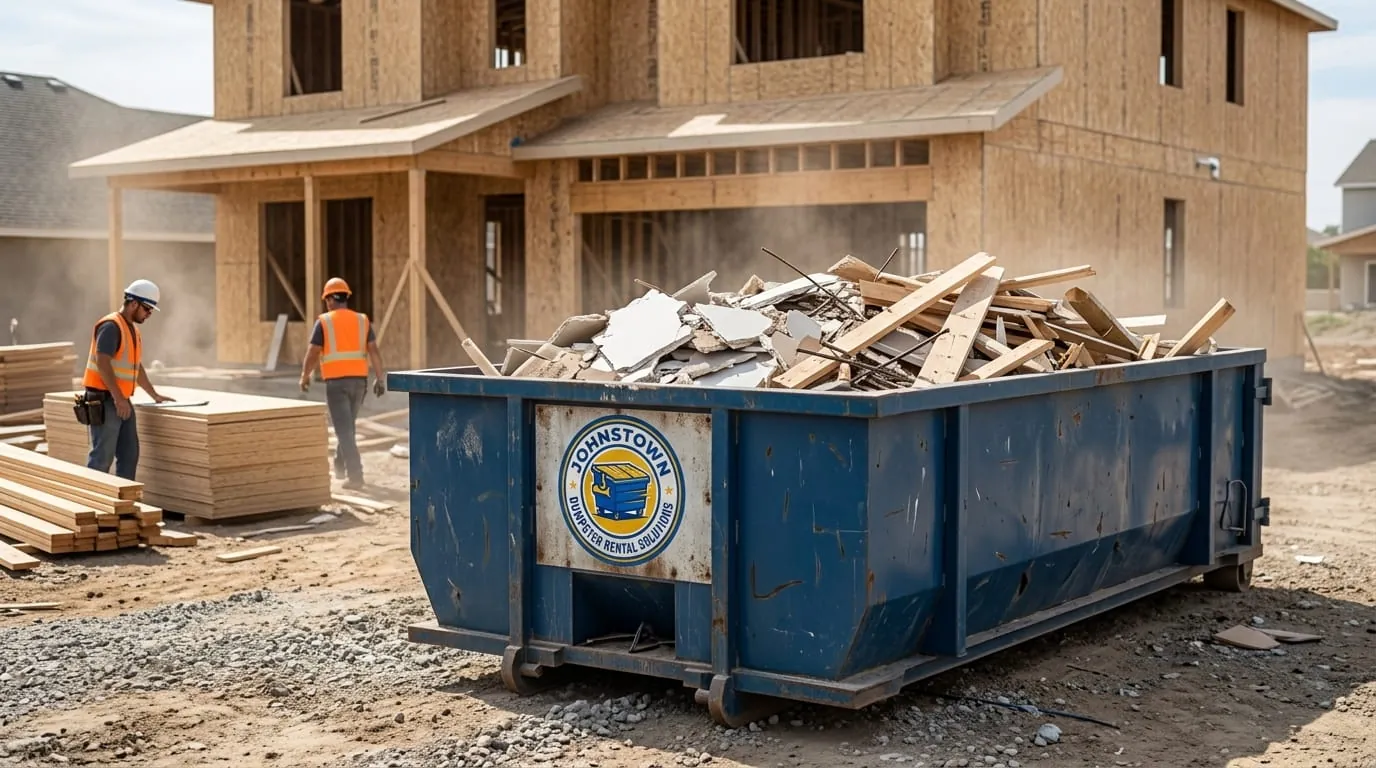
For a mid-size project, sorting on site and hauling separated loads is ideal, but it is rarely practical when you are also doing the demolition. That is where a roll-off dumpster earns its keep: you fill one container, and the debris is hauled and sorted downstream. Just remember that some materials are prohibited from dumpsters entirely, which is worth checking before you fill a container.
Household Hazardous Waste
Paints, solvents, pesticides, automotive fluids, pool chemicals, propane cylinders, and similar products are household hazardous waste, or HHW, and they must never go in your trash, your recycling, or a dumpster. Poured down a storm drain or tossed in with regular garbage, these materials can leach into groundwater or run straight into the Stonycreek and Conemaugh. Cambria County and partner organizations periodically host HHW collection events where residents can drop off these products safely and free of charge or at low cost.
Because these events are scheduled rather than continuous, the dates and locations change from year to year. Rather than rely on a fixed schedule, check with the City of Johnstown, the Cambria County Solid Waste Authority, or the Pennsylvania Department of Environmental Protection for the current collection calendar before you clear out that shelf of old cans. In the meantime, store hazardous products in their original containers, tightly sealed, away from heat and children.
Electronics and E-Waste
Under Pennsylvania's Covered Device Recycling Act, many electronics, including televisions, computers, monitors, and laptops, are banned from landfills, which means haulers cannot simply take them at the curb and they do not belong in a dumpster. Instead, use an approved e-waste collection point or a manufacturer or retailer take-back program. Some county drop-off sites and periodic collection events accept electronics as well. E-waste contains both valuable recoverable metals and hazardous components like lead and mercury, so keeping it in the proper stream protects both resources and the watershed. Confirm current e-waste options with the Authority or PA DEP, as accepted devices and locations are updated over time.
Yard and Storm Debris
Between summer thunderstorms rolling through the valley and the seasonal cleanup that follows, yard and storm debris is a constant in Johnstown. Branches, brush, leaves, and grass clippings are organic material that should stay out of the landfill and, just as important, out of the rivers, where woody debris can worsen flooding and clog channels. Many residents compost leaves and grass, and yard waste is often collected or accepted separately from regular trash. After a significant storm, the City or county may set up temporary debris collection points; watch official announcements for those details.
When a storm leaves you with more than a few bags of brush, or a fallen tree, professional help moves faster than repeated trips to a drop-off site. A dedicated yard waste removal service handles the hauling so the material is diverted correctly instead of piling up where the next heavy rain can wash it toward the water.
Keeping Debris Out of the Conemaugh and Stonycreek
Everything above comes back to one point: in a river valley like ours, disposal decisions have downstream consequences, literally. Illegal dumping along riverbanks and ravines is not only a code violation, it directly threatens water quality, fish habitat, and the flood-control systems Johnstown depends on after its long history with flooding. Never dump anything over an embankment or into a storm drain. Storm drains typically flow untreated straight to the nearest waterway, so a bucket of leftover paint or drywall slurry rinsed into one is effectively poured into the river. Containing your debris in a proper receptacle, whether a curbside cart, a drop-off bin, or a roll-off dumpster, is the simplest way to keep it out of the water.
When a Dumpster Makes Sense
For everyday household trash and routine recycling, your curbside service and the county drop-off sites cover you. But there is a threshold where those options stop being practical: a full basement or estate cleanout, a kitchen or bathroom remodel, a roofing job, a large deck teardown, or hauling years of accumulated junk out of a property. When you are generating more waste in a weekend than your cart holds in a month, renting a roll-off dumpster is the efficient, compliant choice. You get a single container sized to the job, one pickup, and debris that is hauled and sorted properly rather than left to migrate toward the rivers.
Our residential dumpster rental is built for exactly these projects, and for smaller or labor-heavy cleanouts where you would rather not lift a thing, our junk removal service does the loading for you. The right choice depends on the volume, the type of material, and how much of the work you want to handle yourself.
Choosing a Size
As a rough starting point, a small container suits a single-room cleanout or bathroom remodel, a mid-size unit fits most kitchen renovations and garage or basement cleanouts, and a large container handles whole-home cleanouts, roofing, or major construction. If you are unsure, it is almost always cheaper to size up once than to overfill a small container and pay for a second haul. Keep prohibited items, hazardous waste, tires, and electronics out of the dumpster, and everything moves smoothly.
Not sure which service or size fits your project? Contact us and we will help you plan it, or call (814) 809-7504 to talk it through and schedule a drop-off. Johnstown Dumpster Rental Solutions makes it easy to clear out, renovate, and clean up while keeping our valley's rivers clean.

Owner, Johnstown Dumpster Rental Solutions — sharing straight advice from years of local hauling across Johnstown and Cambria County.
Frequently Asked Questions
Does Johnstown have curbside recycling?
Most Johnstown and Cambria County neighborhoods have curbside recycling through their trash hauler, though pickup days and accepted materials vary by municipality and hauler. Programs commonly take cardboard, paper, metal cans, and plastic bottles and jugs; glass acceptance depends on the local program. Confirm your specific accepted-materials list and schedule with your hauler or the City, since rules are updated periodically.
Where can I drop off recycling or extra waste in Cambria County?
The Cambria County Solid Waste Authority operates transfer and drop-off infrastructure, and there are drop-off recycling locations around the county for residents without curbside service or with materials that will not fit in a cart. Fees, hours, and accepted items differ by site and can change, so call ahead or check the Authority's current information before you go.
How do I get rid of construction and renovation debris in Johnstown?
Construction and demolition debris does not belong in curbside trash or recycling. Clean wood, metal, concrete, and cardboard can often be diverted, while mixed debris must be disposed of properly. For most home projects the simplest option is a roll-off dumpster, which is hauled and sorted downstream. Keep prohibited and hazardous items out, and see our construction debris guide for details.
What do I do with paint, chemicals, and electronics?
Household hazardous waste like paint, solvents, and automotive fluids must never go in trash, recycling, or a dumpster; Cambria County and partners periodically host HHW collection events, and the dates and locations change, so check with the City, the Solid Waste Authority, or PA DEP for the current calendar. Electronics are landfill-banned in Pennsylvania and must go to an approved e-waste program or drop-off point.
Why does proper disposal matter so much in Johnstown?
Johnstown sits where the Conemaugh and Stonycreek Rivers meet, so debris that is dumped, spilled, or washed off the ground can reach the water quickly. Illegal dumping along banks and into storm drains, which usually flow untreated to the nearest waterway, harms water quality and can worsen flooding. Containing waste in a proper cart, drop-off bin, or roll-off dumpster keeps it out of the rivers.